搜索产品搜索文章
Boundary scan testing and professional in-system programming, deeply integrated into one device and one software suite — covering the full flow of scan, test, analysis and programming. No physical probes are needed to run interconnect tests and fault detection on precision boards.
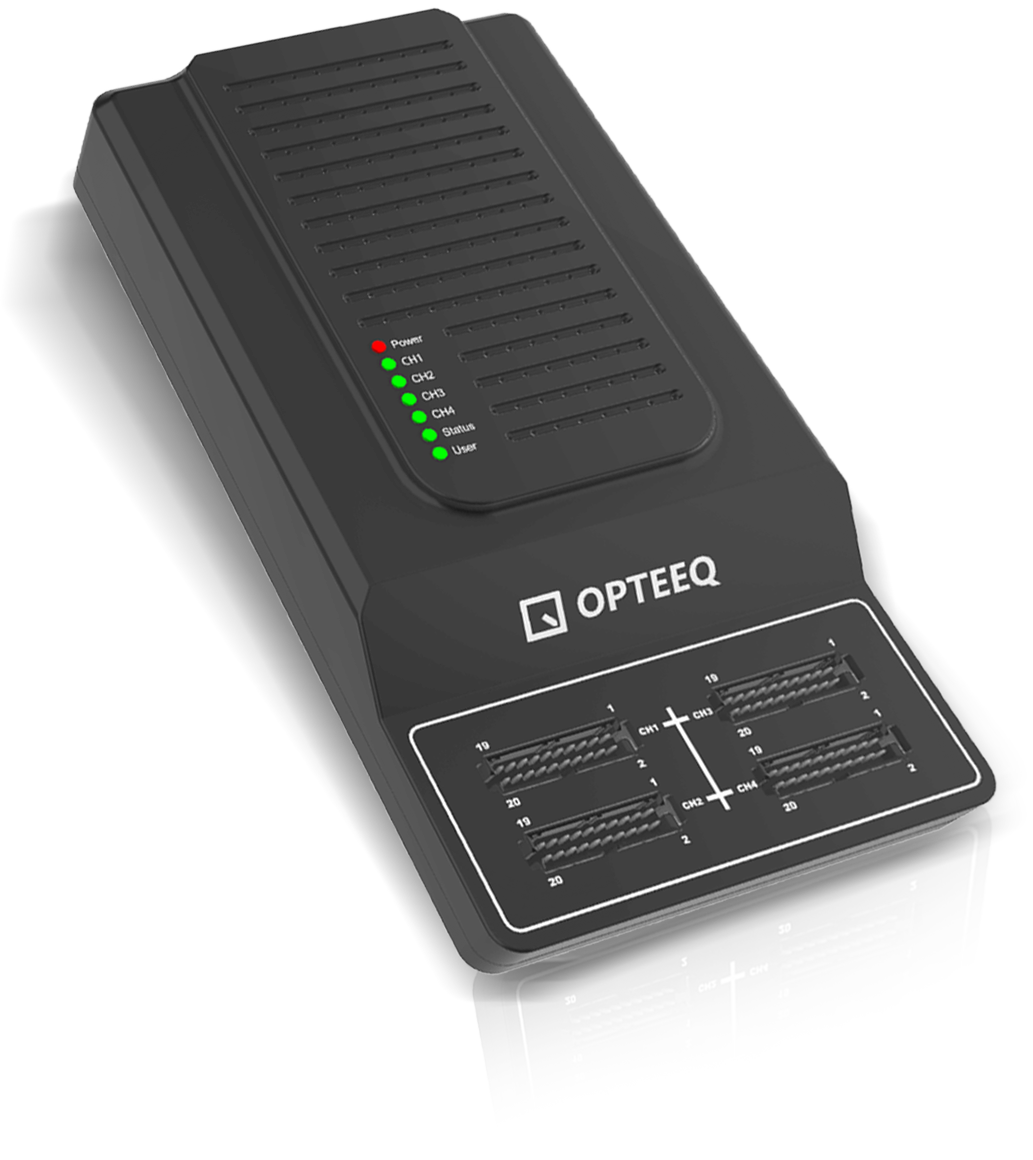
OPTEEQ’s integrated boundary scan and in-system programming solution deeply combines JTAG boundary scan testing with professional device programming on one hardware and software platform. Device identification, pin monitoring, test generation, scan testing, program programming and result analysis all run as a single integrated flow, automating the full sequence of “identify — import — generate — scan — program — analyze” and raising test efficiency.
No physical probes and no direct contact with PCB solder joints are required to complete interconnect testing and fault detection on precision boards — ideal for R&D validation and volume production testing of highly integrated devices such as SoC, CPU and DDR.
One device, multiple uses, lower equipment investment
Compact body, easy production line integration
Pin-level fault detection and localization
Four parallel channels, fully automated flow
Boundary scan, professional programming and unified management running together on one hardware and software platform
Board-level interconnect testing based on IEEE 1149.x
High-speed in-system programming for multiple protocols and device types
Full-process data management, from R&D to mass production
Full coverage of standard protocols, open interfaces for easy integration
IEEE 1149.1 · 1149.6 · 1149.7
Compatible with mainstream JTAG test standards for different application scenarios
SPI · I2C · UART
Multiple protocols to meet different device test requirements
DLL · API · C · LabVIEW
C and LabVIEW examples with complete development interfaces for system integration and function extension
DDR · PCIe · Ethernet · USB
Covers mainstream interfaces to meet complex system-level test needs
Non-JTAG Extension
Extends test coverage to more device types
Auxiliary Test Boards
Rich board options for different application scenarios
The SG400x programmer / TAP controller is the core hardware; together with the host software and an optional IO module it forms a complete integrated solution
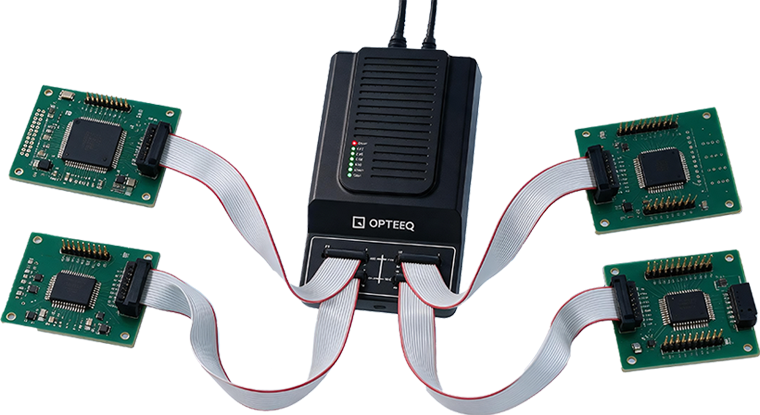
A unified host software platform. Boundary scan — JTAG-based boundary scan testing, netlist and BSDL management, chip pin monitoring, daisy-chain scanning and interconnect test. Programming — in-system programming across multiple device types and protocols. Boundary scan and programming run in parallel to support R&D validation, automated test and volume production.
Click a channel button to switch that channel’s mode (programming / boundary scan)
Optional accessories such as the IO module support connectivity testing and extend test capability as needed.
A visual, automated and traceable testing and programming experience
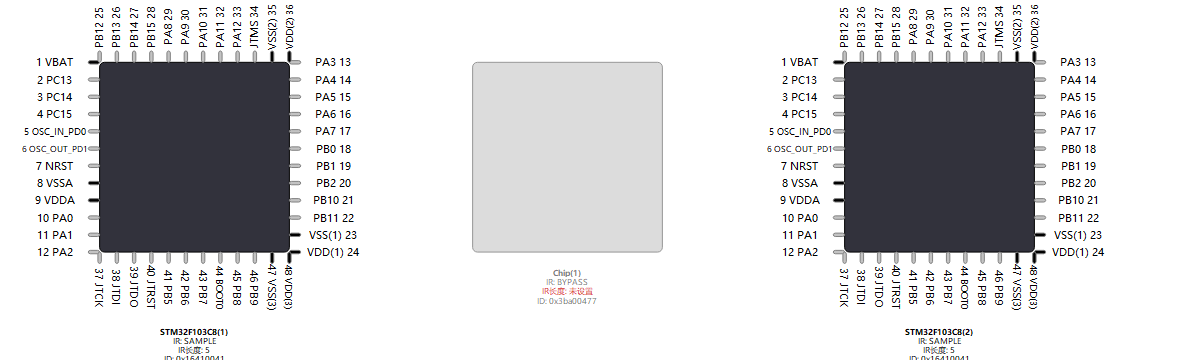
The analysis module of the boundary scan test suite, with a visual chip chain view and real-time monitoring of chip pin status.
Test tasks are configured graphically, with built-in basic test, SPI/I2C test and other test types. Pre-configuration and post-configuration can both be edited so test flows combine flexibly to match the differing requirements of each board.
Test projects are managed and executed centrally, with custom mapping between project channels and physical channels. Test status logs and device status are displayed side by side in real time, result folders are named automatically by timestamp and serial number, and test data is stored by category for easy traceability, statistics and batch analysis.
Result files are parsed automatically, presenting test items and failed items in a structured view — no manual data sorting required, which speeds up analysis. Standard PDF report preview and Gerber layout result preview locate faults quickly, covering both document archiving and hardware fault localization.
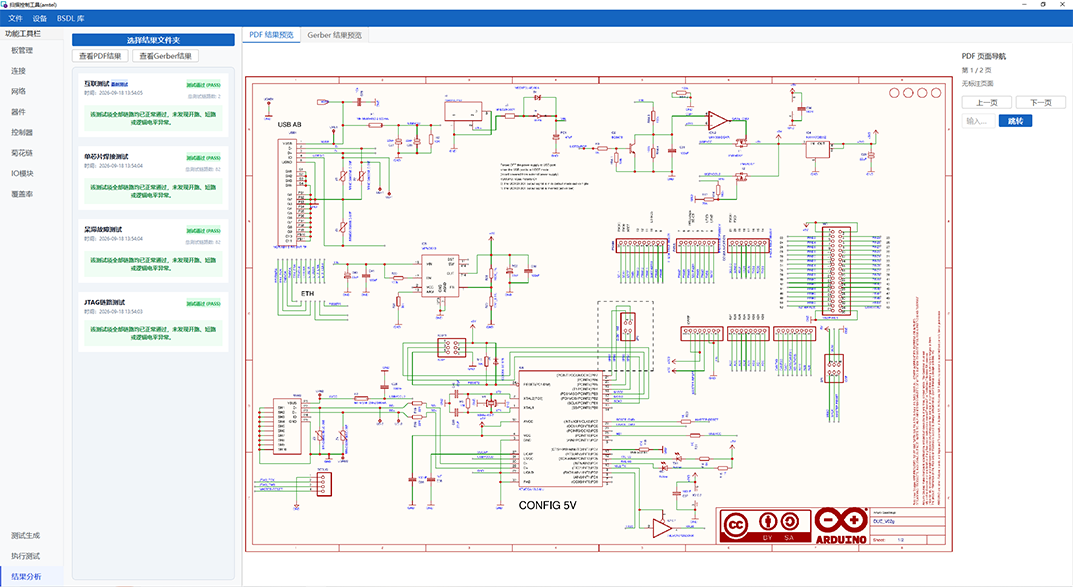 PDF result previewAnnotates test results on schematic PDFs to locate components and nets quickly
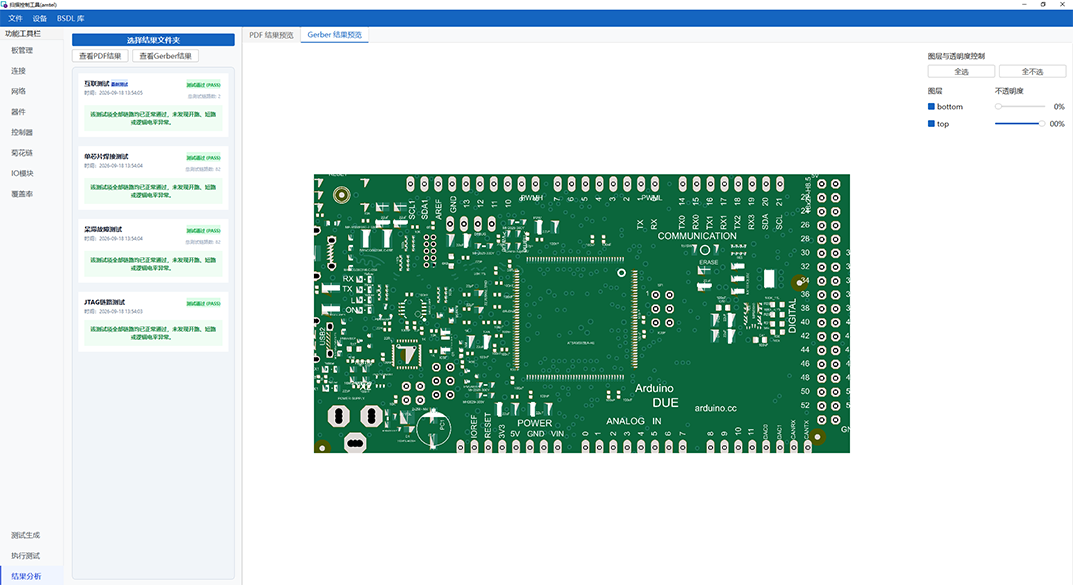 Gerber result previewShows fault locations directly on the layout, for both archiving and localization
The SG400 series comes in four models: SG400, SG400E, SG400H and SG400-M
SG400, SG400E and SG400H are designed for general programming scenarios and all support multi-channel in-system programming and boundary scan testing. SG400-M targets large-capacity devices such as eMMC and OSPI Flash.
The base model of the SG400 series, powered over PoE in line with IEEE 802.3at. Its newly designed programming engine is on average three times faster than the previous S-series, and channel IO/VCC voltage is programmable from 1.6 V to 5.5 V.
SG400E adds a VCC/VPP fast-discharge circuit and dual overload protection to the SG400 hardware for greater stability. Powered independently from 12–24 V DC, it deploys flexibly without being limited by a PoE switch or power-sourcing equipment.
SG400H keeps every advantage of the SG400 series and adds an adjustable VSUP supply: all four channels deliver 5–13.5 V at 200 mA to power the target board directly. It is especially valuable for automotive MCUs, body controllers and motor drives, where programming needs not only IO logic levels but also a higher supply voltage for the board.
SG400-M programs eMMC, OSPI Flash and NAND devices in-system, with speed optimized for large image files — suited to head units, center consoles and storage applications that require high-speed programming of large Flash devices.
| Model | Power | Key features | Applications |
|---|---|---|---|
| SG400 | PoE power | Minimal wiring, powered over the network cable | General MCUs, boards with their own supply |
| SG400E | Independent power | Independent supply, safer and highly noise-immune | Complex production environments |
| SG400H | Independent power | VSUP 5–13.5 V board power with voltage and current monitoring | Boards that must be fully powered to program |
| SG400-M | PoE power | Optimized for eMMC and OSPI Flash | Head units, gateways and other high-capacity storage programming |
From consumer electronics to aerospace — test and programming needs across industries
 Opteeq Technologies丨
